
Lead brief
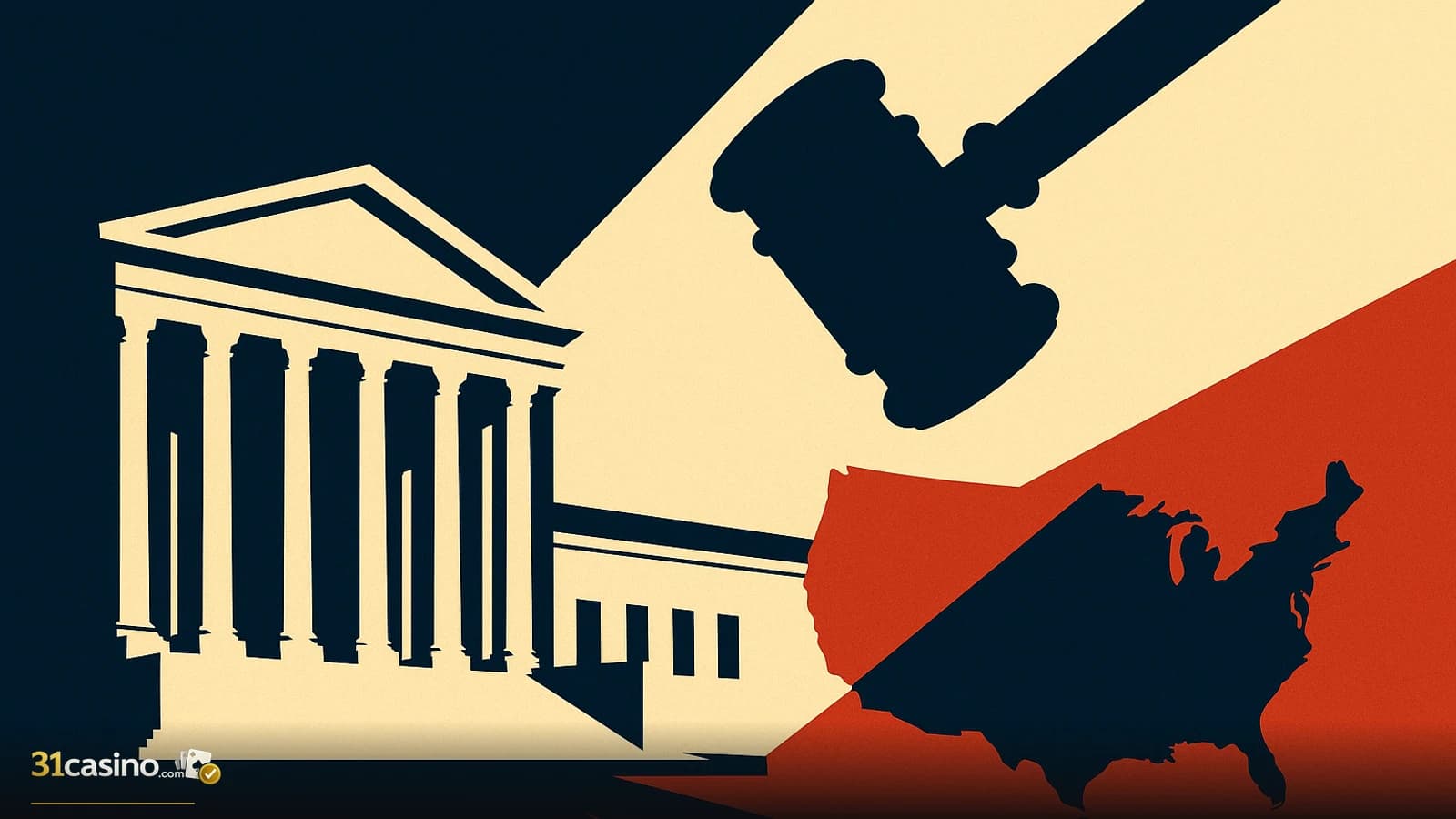
The US Supreme Court will review whether states can regulate federally approved prediction markets such as Kalshi, following a dispute with New Jersey. The ruling could redefine state and federal authority over financial products and betting in the United States.
Coverage frame
This piece sits inside the wider 31Casino news desk, where single developments are read against regulation, market structure, and reader relevance.
Primary source base
- ▸The US Supreme Court will hear a case centered on state powers to regulate or ban federally licensed prediction markets.
- ▸New Jersey argues that Kalshi operates as an unlicensed sportsbook despite federal Commodity Futures Trading Commission (CFTC) oversight.
- ▸The decision could have sweeping implications for the boundaries of state and federal gambling regulation.
- ▸The case follows the 2018 Supreme Court repeal of PASPA, which let states legalize sports betting individually.
What Happened
The United States Supreme Court has agreed to consider whether states may prohibit sports-related trading on federally regulated prediction markets, responding to an escalating legal battle triggered by Kalshi, a popular event prediction exchange. New Jersey authorities contend that Kalshi is effectively operating as an unlicensed sportsbook within their jurisdiction, violating state law, while Kalshi maintains its platform is regulated by the CFTC and should be preempted from additional state-level gaming regulation. This dispute brings into question the powers of states versus federal authorities in the wake of the Supreme Court’s landmark PASPA decision in 2018, which allowed states to regulate or ban sports betting at their discretion.
Why It Matters
The Supreme Court’s decision will determine whether states can block platforms like Kalshi that offer trading on the outcomes of sporting or political events, even if those exchanges operate under federal approval. The legal distinction between a "prediction market" and a sportsbook is central. Prediction markets, such as those offered by Kalshi, allow users to buy and sell contracts based on the likelihood of various outcomes (from elections to sports scores), resembling financial derivatives more than traditional sports betting. Yet, to many state regulators, the practical impact is often the same: individuals are staking money on uncertain future events.
The question at stake is whether federal regulation by agencies like the CFTC should override state gaming laws, or whether states retain the right to outlaw such activity within their borders. If the court sides with New Jersey, prediction markets could face a patchwork of state regulations similar to conventional online gaming and betting, complicating compliance and market access for operators. Conversely, if the court backs Kalshi’s position, federally regulated exchanges might enjoy greater uniformity across the US, potentially fueling growth in novel financial products tied to real-world outcomes.
2018 PASPA repeal — The Supreme Court’s prior decision gave states the power to legalize sports betting, a move that reshaped the US gambling landscape.
The outcome could also set precedent for emerging products at the intersection of finance, entertainment, and gaming. With the proliferation of technology platforms blurring lines between traditional financial trading and wagering, clear regulatory frameworks are increasingly critical, not only for market stability, but also for consumer protection.
Industry Context
This Supreme Court case is emblematic of a wider struggle over regulatory authority in the US gaming sector. In recent years, innovation has outpaced many state and federal rules, leading to uncertainty for operators, investors, and consumers. While the Commodity Futures Trading Commission has signalled willingness to treat prediction markets as exchanges for financial products, several states see them as encroachments on their right to control gambling activity.
The industry faces similar jurisdictional debates on issues ranging from daily fantasy sports to online poker and sweepstakes-based casino products, where the differentiation between gaming and gambling is often highly contested. If the Supreme Court provides a definitive answer, it will set a standard for how these jurisdictional conflicts may be addressed in future regulatory challenges. For industry stakeholders, understanding the patchwork of compliance obligations remains crucial. Our Casino regulation guide offers further insight into how regulatory models differ internationally and across the US.
Regulatory Background
The Post-PASPA era has seen the rapid expansion of regulated sports betting across more than 30 states, with each state crafting its own set of licensing, tax, and consumer protection frameworks. The Kalshi dispute is notable because its contracts, though approved by the CFTC, involve event outcomes that overlap with what many states classify as gambling. New Jersey has interpreted participation in these markets as tantamount to unlicensed wagering, placing platforms like Kalshi in a legal grey area. As more prediction markets seek federal approval, states’ willingness to assert jurisdiction—particularly over sports-related products—has only intensified.
What Happens Next
The Supreme Court is expected to hear arguments later this year, with a ruling likely in 2025. Until the court provides clarity, prediction market operators face ongoing uncertainty regarding state-level enforcement actions. The outcome will define the permissible scope for both state and federal authorities in regulating the rapidly evolving event contracts market.
Sources
This article is for informational purposes only. 31Casino does not provide gambling services or recommendations. If you're concerned about your gambling, visit our Responsible Gambling page for support resources.