
Lead brief
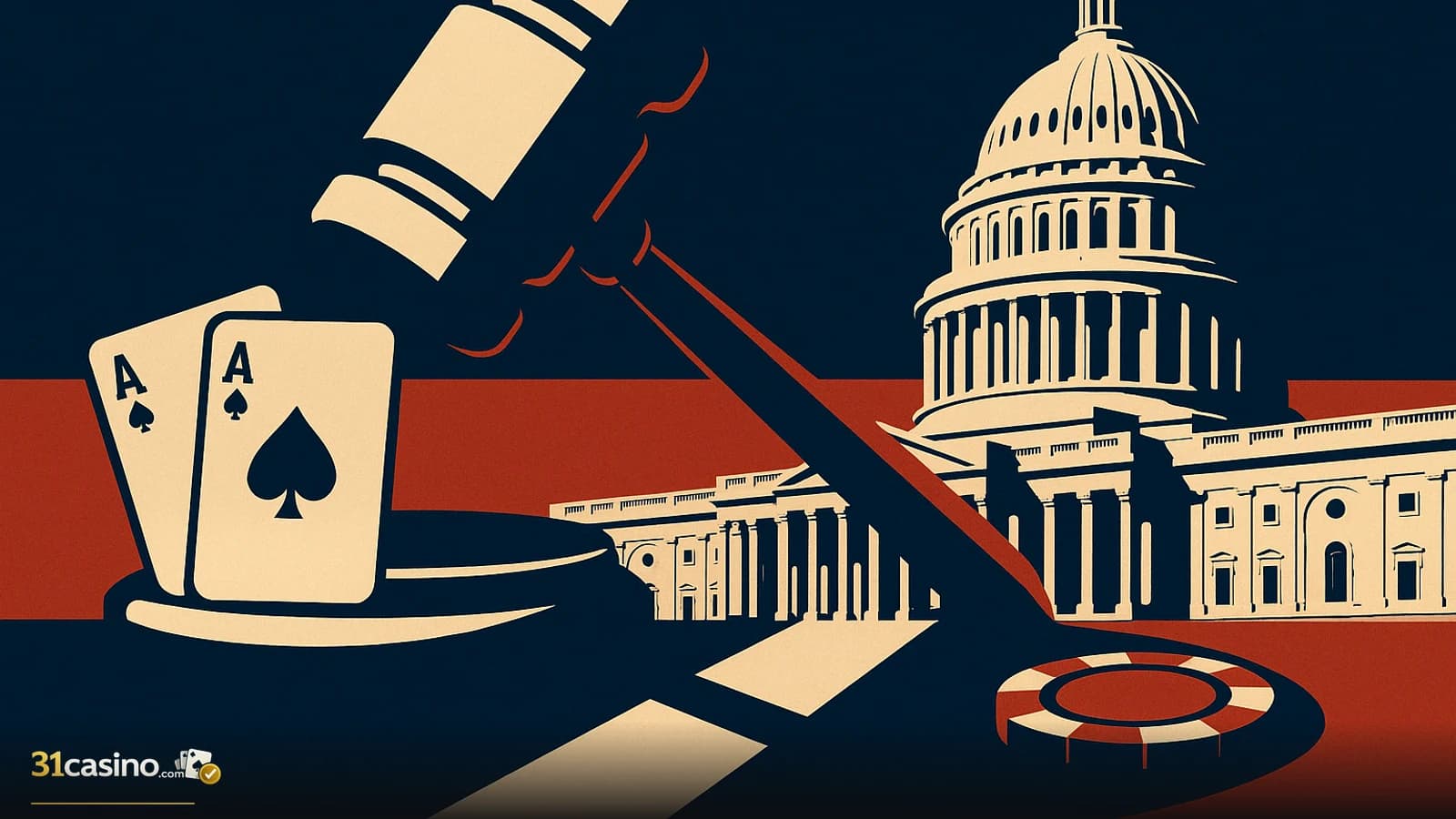
Senior leaders from the American Gaming Association and Indian Gaming Association have alerted the US Congress to potential risks from expanding prediction markets, urging careful regulation amid proposed financial reforms. Their intervention highlights a growing policy debate at the intersection of gambling and financial market oversight.
Coverage frame
This piece sits inside the wider 31Casino news desk, where single developments are read against regulation, market structure, and reader relevance.
Primary source base
- ▸Leaders from the AGA and IGA have formally raised concerns with Congress regarding the rapid growth of prediction markets in the US.
- ▸The warning comes as lawmakers consider regulatory reforms that could affect how prediction markets are classified and policed.
- ▸Tribal and commercial casino operators caution that unregulated prediction markets could undermine established gaming regulations.
- ▸The dispute highlights challenges in drawing clear distinctions between financial instruments and gambling activity.
What Happened
On Friday, two of the most influential organizations in US gaming publicly called on Congress to exercise caution as it weighs regulatory changes that could accelerate the growth of prediction markets nationwide. William C. Miller Jr., president and CEO of the American Gaming Association (AGA), and David Z. Bean, chairman of the Indian Gaming Association (IGA), co-authored a letter to federal lawmakers. Their message: any deregulatory moves around prediction markets risk destabilizing the current equilibrium of US gambling regulation.
Prediction markets, which allow participants to wager on outcomes ranging from political elections to economic indicators, have long existed in a legal grey zone in the United States. Recent developments suggest that Congress is considering regulatory shifts that may treat some prediction market activity as financial rather than gambling transactions. The gaming associations contend this could have substantial, and possibly unintended, repercussions for both tribal and commercial gaming interests.
Why It Matters
The intervention marks a significant escalation in the ongoing debate over the legal status of prediction markets. At stake is the distinction between activities regulated as gambling under state and tribal compacts, and those classified as financial instruments and therefore policed by agencies like the Commodity Futures Trading Commission (CFTC).
If prediction markets were to gain broad regulatory legitimacy as financial products, they could sidestep state-controlled gambling frameworks that underpin not just commercial casino gaming but also sovereign tribal operations. Such a shift could, gaming leaders argue, create competitive imbalances and erode state and tribal revenues derived from licensed gambling.
Nearly $40 billion — direct annual economic impact of tribal and commercial casino gaming in the US, according to the AGA.
This growing economic sector supports thousands of jobs and funds a wide array of state and tribal programs, including healthcare, education, and infrastructure improvements. Market disruption from unregulated or loosely governed prediction markets, gaming advocates warn, could undermine these critical funding streams and erode longstanding public policy safeguards.
Further, the convergence of gambling products with speculative financial instruments creates compliance risks. Prediction markets often attract casual participants who may not appreciate the difference between regulated wagers and investment contracts with markedly different consumer protections. The onus falls on lawmakers and regulators to delineate clear guidelines to avoid regulatory loopholes and potential consumer harm.
Industry Context
The rise of prediction markets, while still a fraction of the wider gambling economy, has accelerated in recent years. Platforms like PredictIt and Kalshi have won attention for offering markets on political and economic outcomes. This has sparked both regulatory scrutiny and industry alarm.
Major casino and tribal operators have spent decades navigating tightly controlled licensing regimes at state and federal levels. Tribal gaming compacts, in particular, are predicated on a delicate balance of tribal sovereignty and state oversight. Any bypass around these compacts risks fracturing relationships that sustain large portions of the US gambling ecosystem.
Meanwhile, technology firms entering the prediction market space are pushing for a different regulatory treatment, arguing that their products enable hedging and information generation akin to stock or derivatives markets. The gaming sector argues that, functionally, these activities more closely resemble gambling and must remain subject to established controls.
Regulatory Background
US federal law historically left most gambling regulation to the states, with the Unlawful Internet Gambling Enforcement Act (UIGEA) of 2006 and the Indian Gaming Regulatory Act (IGRA) providing pillars for federal oversight. The CFTC regulates futures and derivatives, but the boundary between regulated gambling markets and exempted financial products has often been ambiguous.
In recent years, requests for no-action relief from the CFTC and legal actions involving prediction market operators have highlighted these ambiguities. Congressional efforts to update or reinterpret relevant financial regulations now threaten to reshape the regulatory perimeter, potentially redrawing lines that have separated gambling and finance for decades.
What Happens Next
Congressional committees are reviewing proposals that could clarify or expand financial regulators' authority over prediction markets. The AGA and IGA joint letter adds significant weight to debates in the House and Senate Banking Committees, which will now have to consider the industry's concerns alongside efforts to modernize market rules for novel products.
Sources
This article is for informational purposes only. 31Casino does not provide gambling services or recommendations. If you're concerned about your gambling, visit our Responsible Gambling page for support resources.