
Lead brief
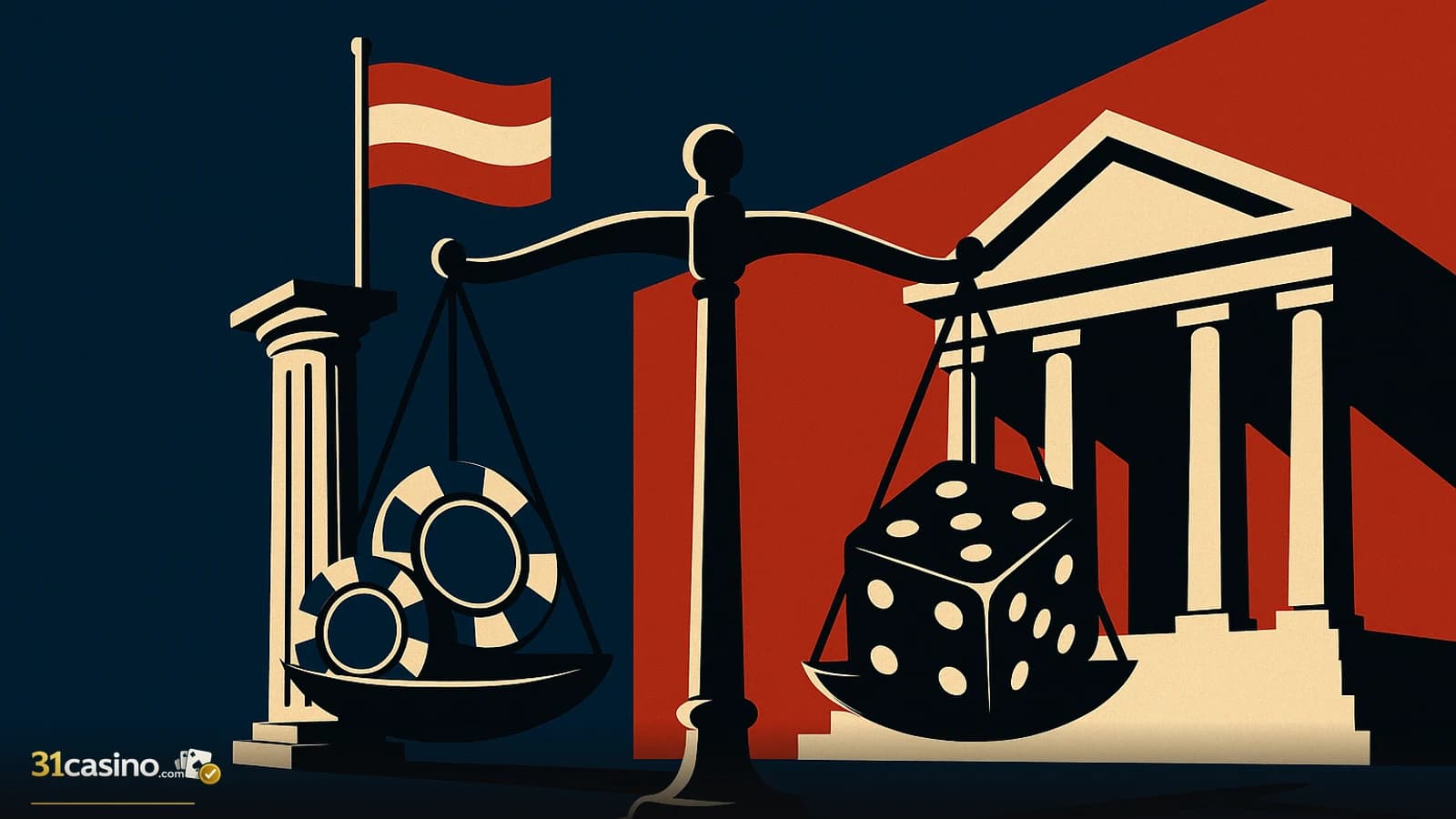
Austria’s ruling parties have agreed to terminate the national gambling monopoly, targeting October 2027 for a regulated, open online gaming market. This could reshape the landscape for operators and regulators, with major implications for the country’s longstanding gaming framework.
Coverage frame
This piece sits inside the wider 31Casino news desk, where single developments are read against regulation, market structure, and reader relevance.
Primary source base
- ▸Austrian government sets October 2027 deadline to end state gambling monopoly.
- ▸Three major parties agree on legislative framework for market liberalisation.
- ▸Move follows years of criticism from EU courts and international operators.
- ▸Reform aims to introduce multi-licence, regulated online gambling environment.
What Happened
Austria’s three main ruling parties—the Social Democratic Party (SPÖ), Austrian People’s Party (ÖVP), and Liberal Conservatives (NEOS)—have reached a formal agreement to dismantle the state gambling monopoly and open the market to competition by October 2027. According to reports from local outlet Krone, and subsequently confirmed by industry press, the parties will cooperate on drafting a comprehensive legislative package to replace the current gambling regime, which has favoured the state-backed operator Casino Austria (Casinos Austria AG).
In taking this step, Austria is responding to both mounting legal challenges and ongoing market demand for a regulated, diverse gaming sector. The targeted launch in late 2027 gives lawmakers just over three years to overhaul regulation, licensing structures, and enforcement mechanisms.
Why It Matters
Austria’s shift signals a decisive break from one of Europe’s oldest state monopolies in gambling—a system that has faced sustained legal criticism at the EU level for years. The European Commission has for over a decade scrutinised Austria’s restrictive model on grounds that it contravenes rules on the free movement of services. This has resulted in several high-profile decisions by the Court of Justice of the European Union (CJEU), which have called out inconsistencies and discriminatory practices in Austria’s market access rules.
An open, multi-licence regime is expected to bring significant change not only for local players, but for the global iGaming industry. Numerous international operators, particularly those already active in regulated European markets, will see new opportunities to enter Austria through official licensing routes. This development is poised to increase competition, drive innovation in product offerings, and, crucially, enhance player protection through coherent regulation.
October 2027 — the formal target date for the full launch of a liberalised Austrian gambling market, marking a significant deadline for legislators and stakeholders.
From a policy perspective, adopting a regulated, competitive model could enable Austria to recapture tax revenue that currently escapes via unregulated or offshore providers. It also puts pressure on market incumbents, especially state-influenced operators, to adapt business practices in a more dynamic commercial environment.
Industry Context
Austria’s plan mirrors wider shifts in the European online gambling landscape. Over the past decade, previously monopolised markets such as Germany, the Netherlands, and Switzerland have transitioned toward regulated, competitive frameworks, each with unique licensing, tax, and compliance requirements. In most cases, these reforms have been aimed at striking a balance between consumer protection, tax collection, and meeting EU obligations.
Historically, Austria’s monopoly benefitted the government and state-affiliated stakeholders, generating substantial revenues while funnelling consumer activity into a limited set of licensed products. However, the rapid digitalisation of gambling has made such isolationist policies increasingly difficult to sustain, especially as players readily access international brands online.
Notably, the global online gambling market exceeded $92 billion in 2023, with Europe accounting for around one-third of this value, according to H2 Gambling Capital. Legal liberalisation in Austria could boost this further and underline the country’s relevance as a significant regional market.
Regulatory Background
The status quo in Austria has roots extending back to the early 20th century, when state control was established over gaming activities. Since then, gambling rights have remained tightly centralised with the state, especially through Casinos Austria and the Austrian Lotteries. However, the lack of a licensing framework for international or private operators has frequently led to legal conflicts, both domestically and in EU courts.
In the last decade, Austrian courts have repeatedly overturned local enforcement actions against overseas operators on the basis that the national monopoly regime is incompatible with EU law. Recent years have also witnessed a raft of player compensation claims, as courts sided with consumers who suffered losses on offshore platforms under the ambiguous Austrian legal landscape.
What Happens Next
The coalition parties are expected to release draft legislation in the first half of 2025, setting out the basic structure for licensing, taxation, responsible gambling requirements, and regulatory oversight. Stakeholder consultation will likely begin soon after, with both local and international industry voices contributing input. Implementation efforts will intensify ahead of the October 2027 launch, with new licensing and compliance systems slated for gradual roll-out during the transition period.
Sources
This article is for informational purposes only. 31Casino does not provide gambling services or recommendations. If you're concerned about your gambling, visit our Responsible Gambling page for support resources.